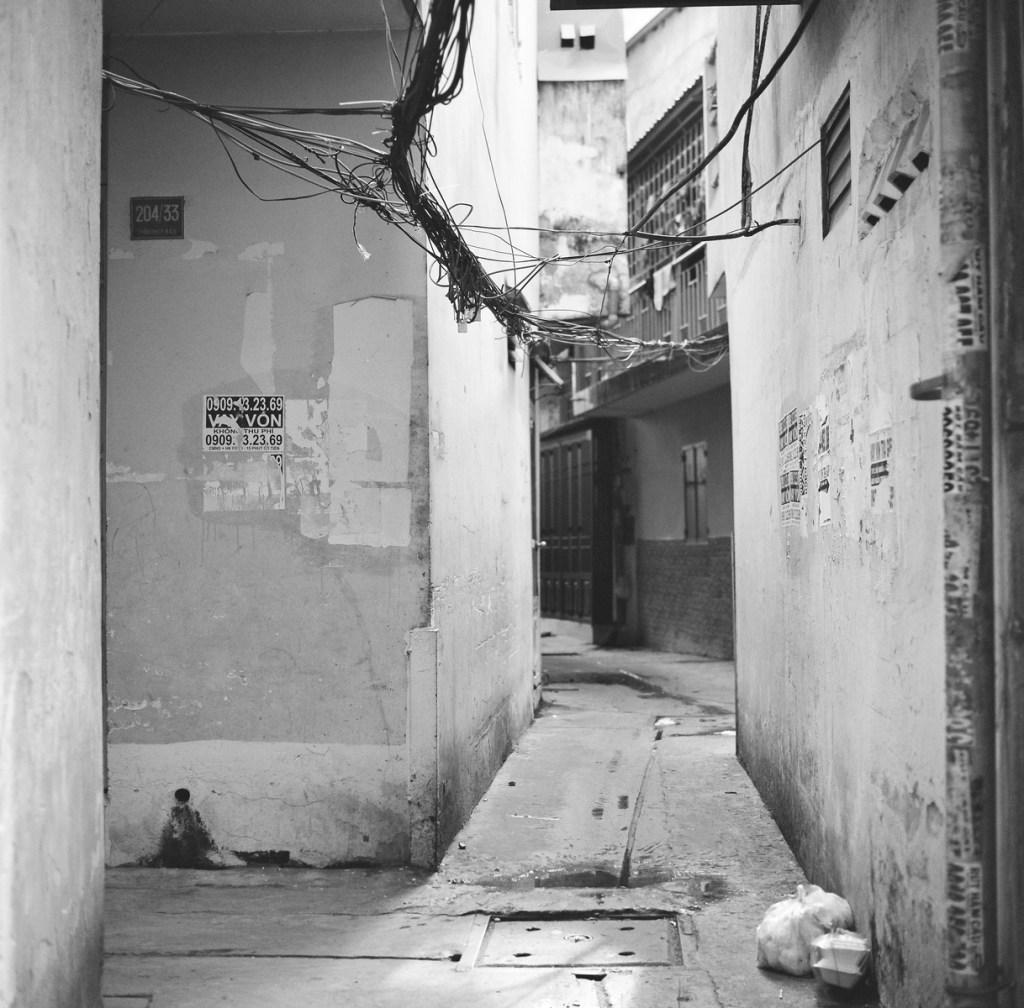
For a while I lived near Ho Chi Minh City, in Vietnam. I used to visit a restaurant that did a slow-cooked goat curry that was pretty special. It’s in district 5, which you might also call the ‘Chinese quarter’. People in that area live in very close-built homes, on top of each other, overhanging and in between and behind. It’s interesting to wander through this kind of maze of homes, seeing how intertwined the people were. I took my camera with me there a few times.
The seeds sown
I explored an apartment building there, and saw maybe a dozen pairs of thongs (flip-flops) outside some of the doors. It seemed like the residents would hang out in each other’s places. And around a corner, we found a cafe apartment. It was kind of like the 42 Nguyen Hue ‘cafe apartment’ situation, but this was quite hidden from foot traffic.


Elsewhere in Vietnam, I also knew people who lived, worked and shopped all in the same massive building. Living like this seemed at once rather depressing but also neat.
When the covid pandemic arrived, this idea continued to develop. At that time, I was in Singapore and I was pretty comfortable, sealed up in my apartment, working from my bed, living off muesli and foodpanda deliveries. I didn’t really feel depressed. It was a cosy dystopia.
Emergence
Some years after, I had some access to a studio with all this equipment and these backdrops to play with, and was in search of ideas. As I examined the various things rolling around my head, this one popped up, almost like a magic 8-ball: the apartment. So this was an early work:
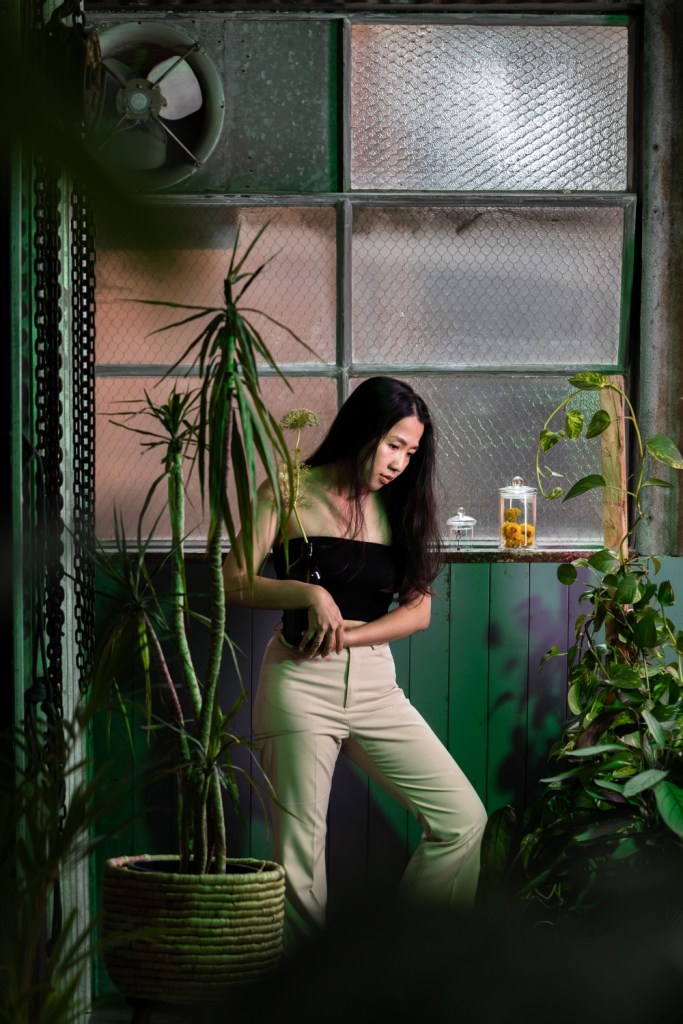
I was playing with green and magenta contrast, to see if that would be interesting. I was really associating people with plants, being grown in a concentrated, artificial setting. It was more of a visual vibe. Compared to ‘Idle Hands’, it had no message – just a feeling. Cool, cozy, lush, with an edge of harshness, the reality of the artifice poking through in places.
Later, I was doing a workshop in a different studio, and had the opportunity to play with an Amaran constant light that can change colour. I ended up putting together these scenes:

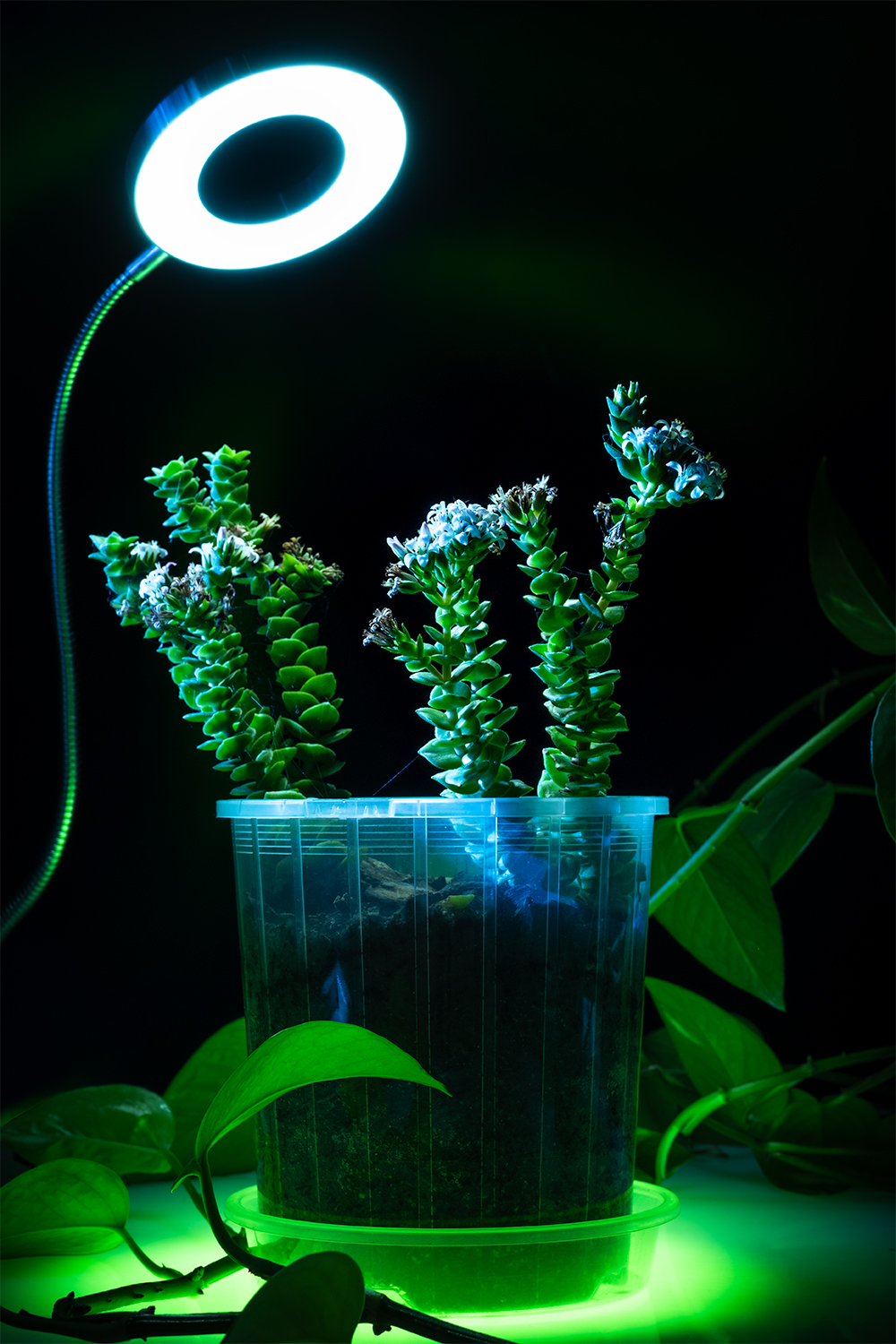
This time, I settled on green and cyan. I found them interesting together, because they are so similar, close on the colour wheel, but also different: green is natural and cyan is artificial. Getting the light right on Thuy’s face was quite tricky. To make the backdrop light I just put a plant in front of a spotlight. Still, these are really unplanned shots. In both cases, I didn’t bring anything in, just used plants and furniture that was sitting around the building already. I didn’t have any lighting plan.

The task: shoot development
Eventually the folio task came about, and the theme was ‘curves’. Terrariums are often curved, and (in a way) are a miniature of the earth itself, which is also curved. There are glasses, drops, leaves, flowers, mushrooms, and vines that all show curves. Another element is that artificial curves are weird, in a way. We think of artificial things being straight and regular, so it can look strange when something artificial tries to mimic nature – for example, the curved lamp, which wouldn’t look so alien if it had a straight arm. From this I already had ideas for more shots.


After this, I looked at the ‘photo essay checklist’ to help fill out the series. The checklist is: establishing shot, action, interaction, fine detail, and portrait. I found I was missing an establishing shot, and some interaction. I figured that I had action covered with the ‘drop’ shot.
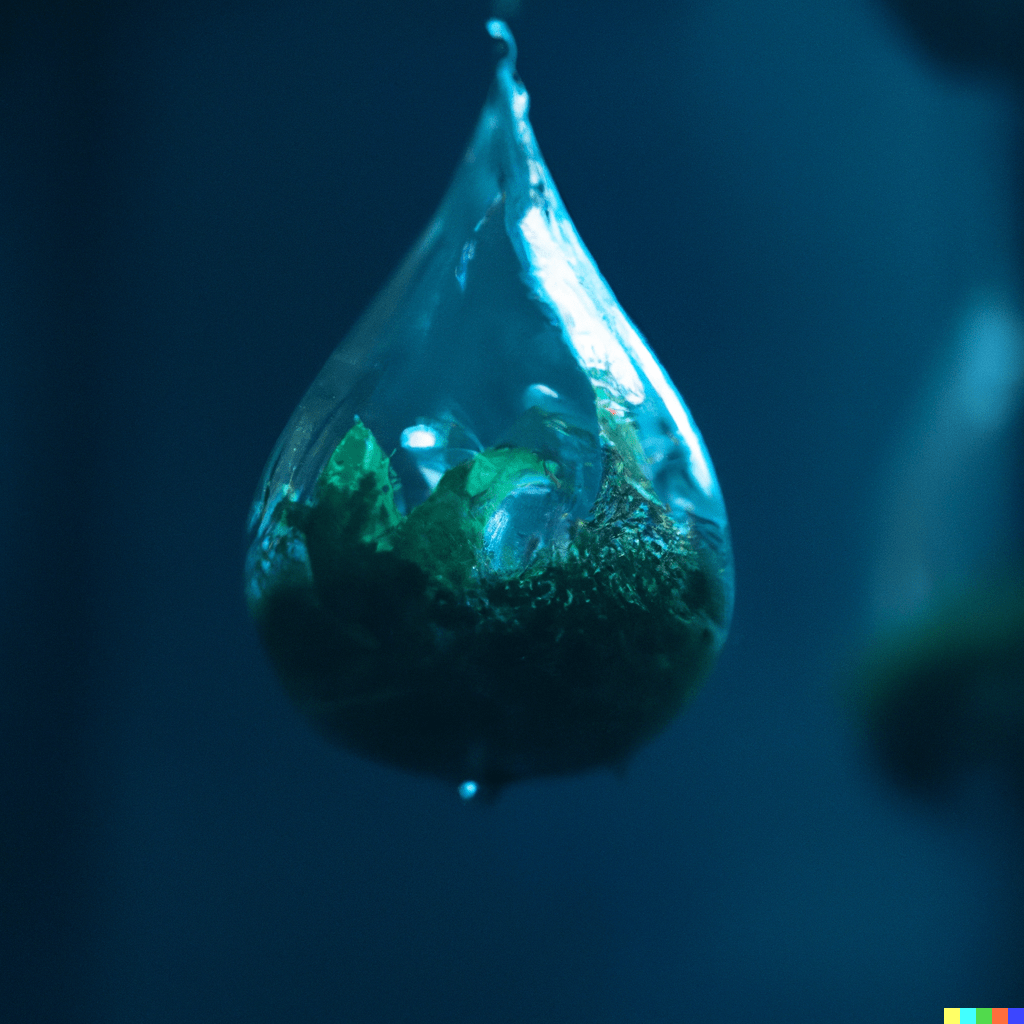
I then had a go at producing some AI mockups. These were interesting but not that helpful.

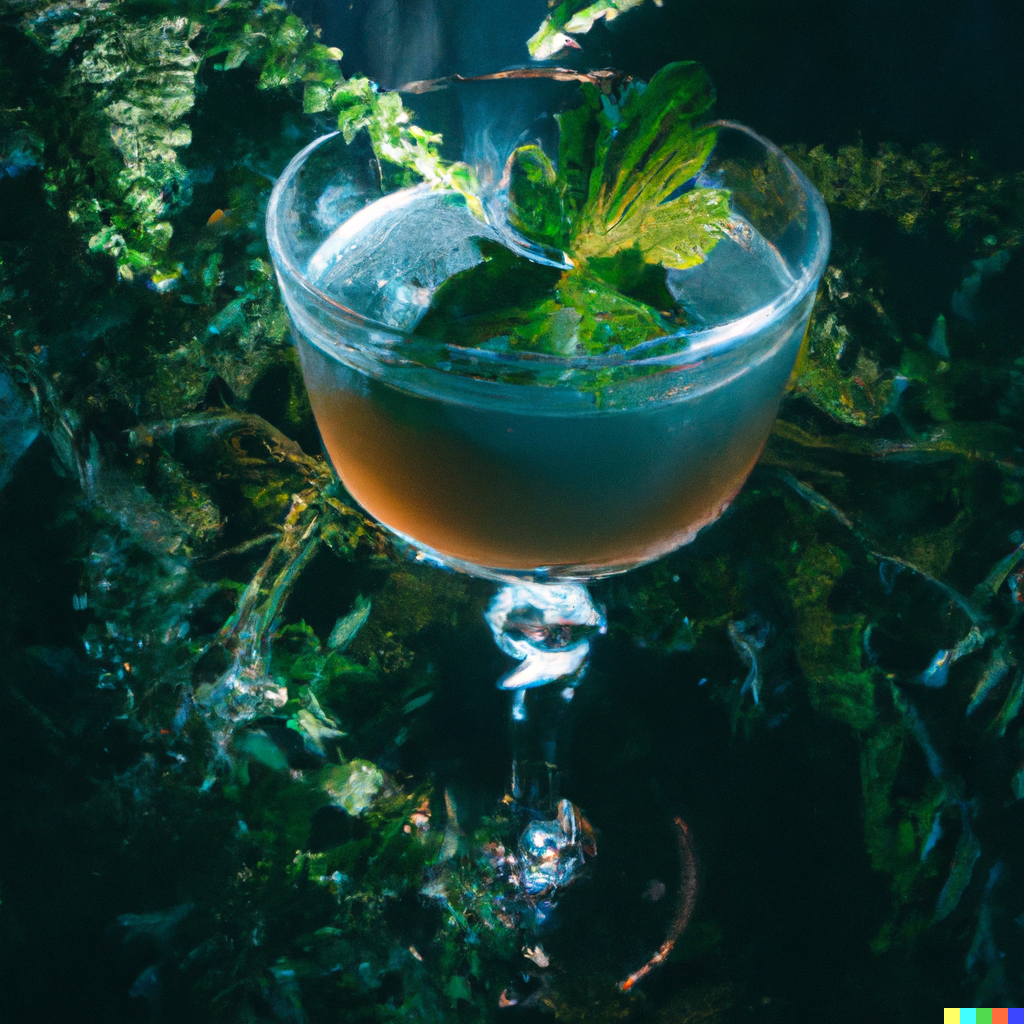
Fruition
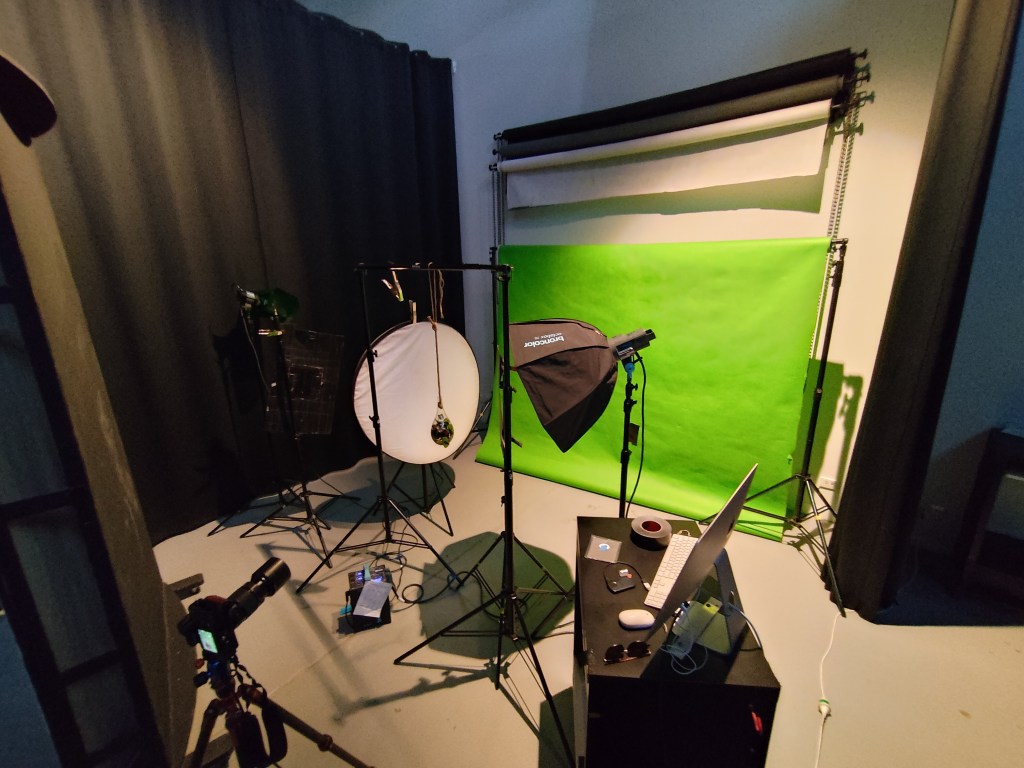
Over a period of about a month, I made the remaining images in the series. These next three were made on the same day. It goes to show that having the ideas ready really helps you get stuff done in the studio. It sounds obvious, but quite often I’ve found myself going in without a clear idea of what I’m actually going to do.

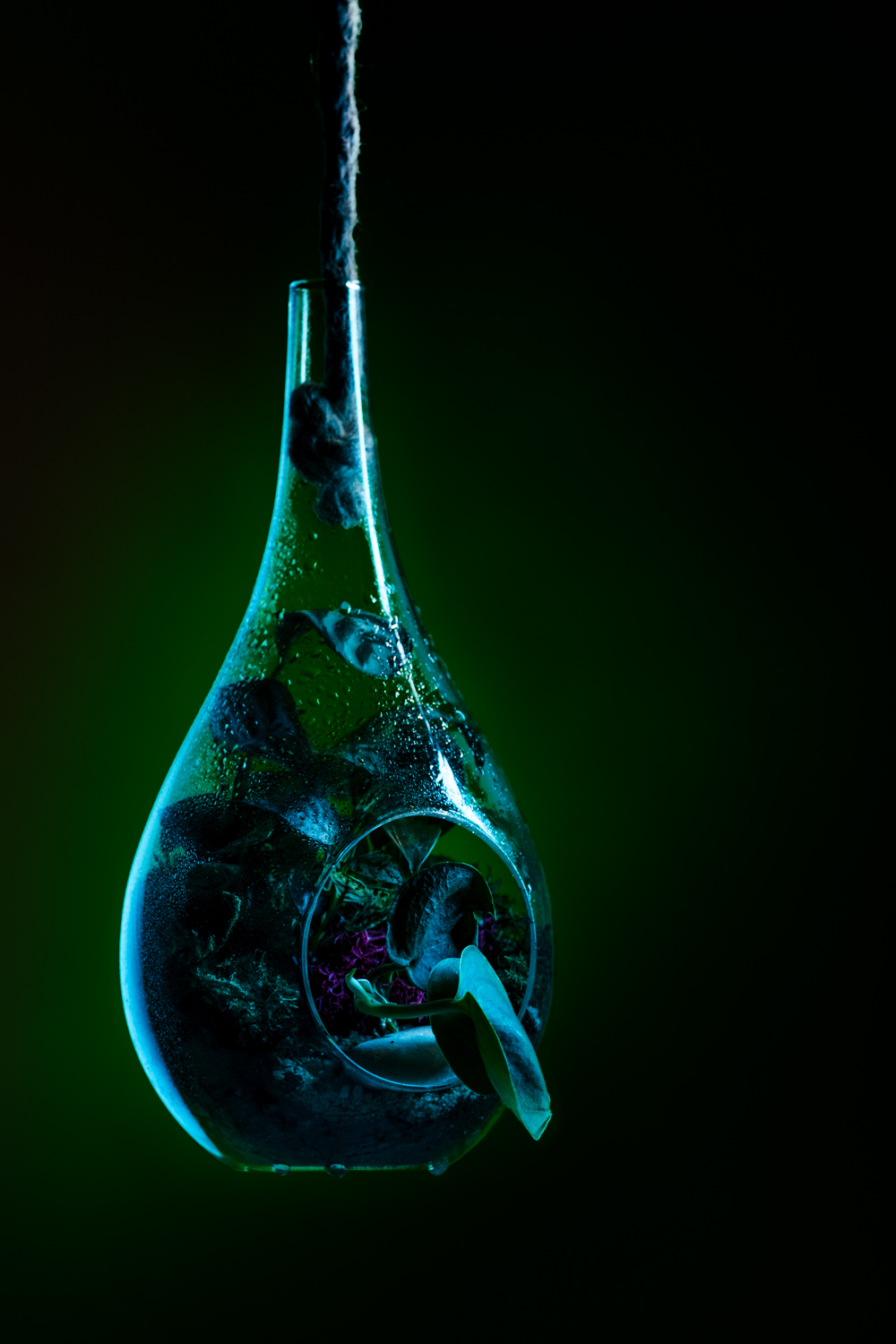
I found this terrarium at a market, and the setup was pretty simple. I used a 50/50 mix of water and glycerin to make the spray drops, and help to soften the reflections a bit. The whole thing would swing with any air current, so I wasn’t able to stack the shot.

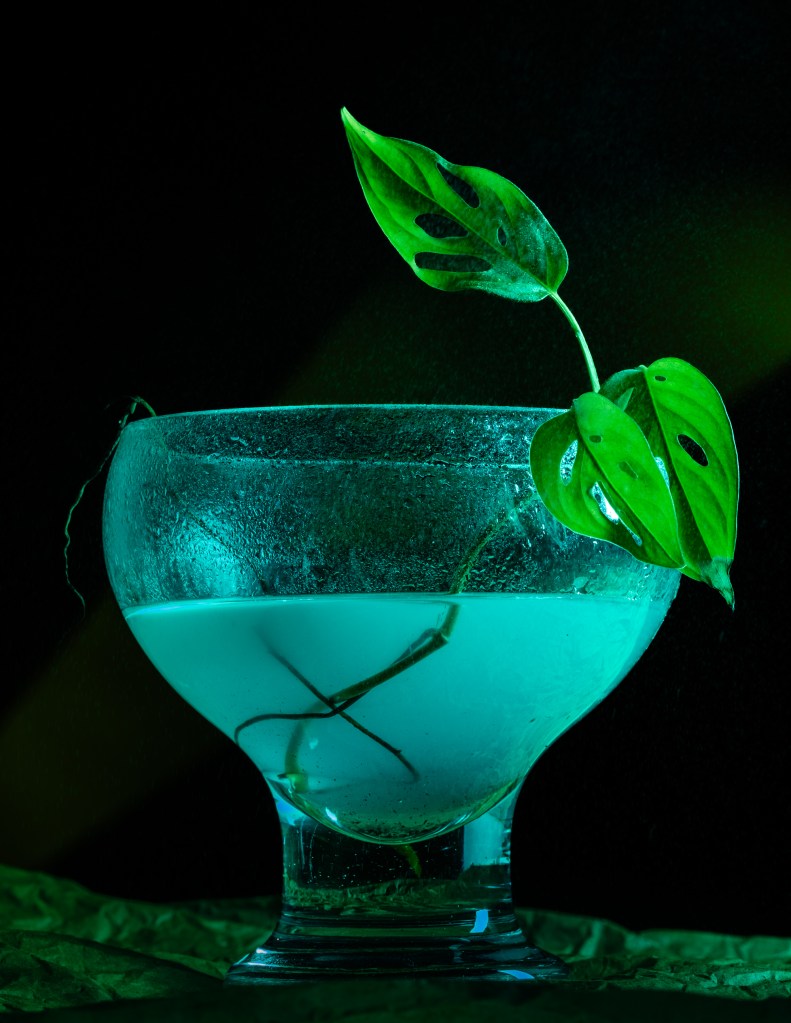
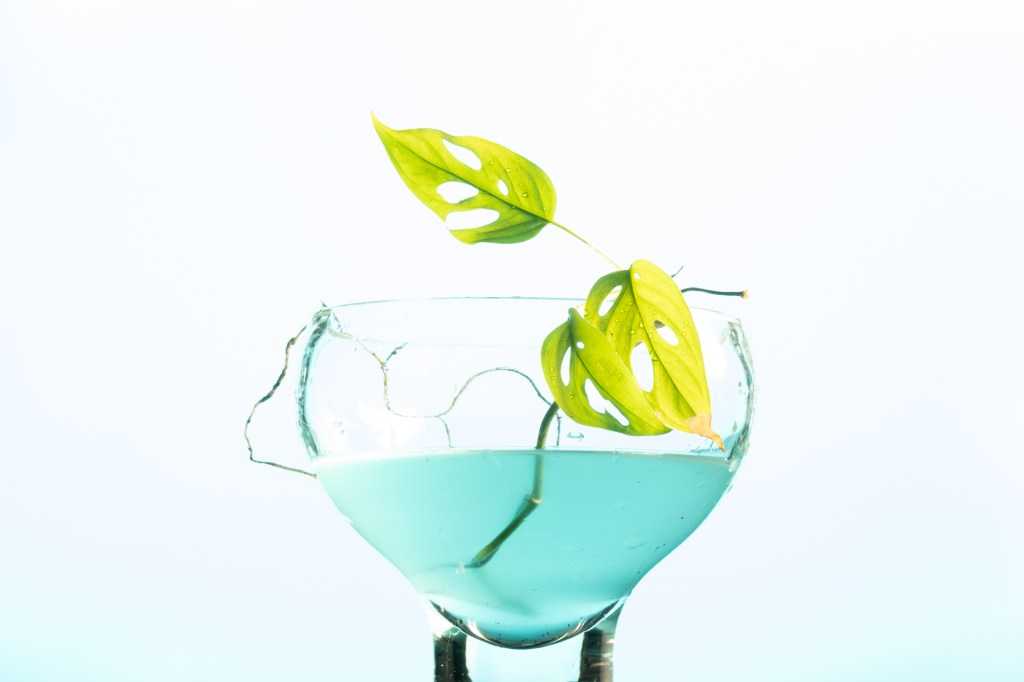
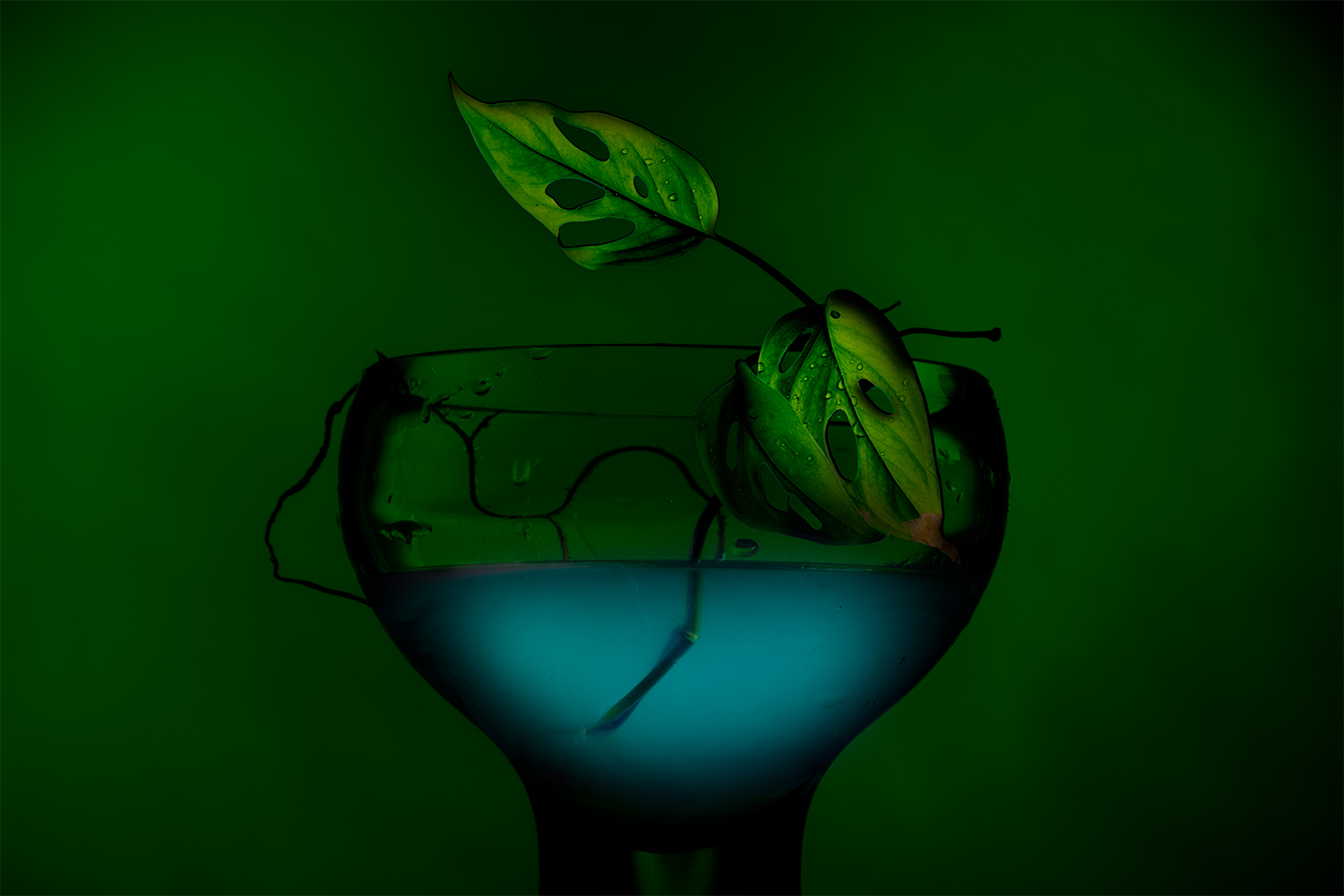
The lighting for this ‘cocktail’ was also pretty simple. The shot I wanted wasn’t actually what I ended up with. A photo I made while setting up the lights really struck me with its silhouette, so I used Photoshop to combine it with a high-key shot and that was the result. The liquid is water with a couple of drops of coconut oil blended in, and some food colouring. It unfortunately led to the death of cutting, even though I washed it afterward.


I figured that this series needed more people, and this was I guess a variation of Thuy’s shot. It was a pretty quick shoot, using the little Broncolor ‘picobox’.

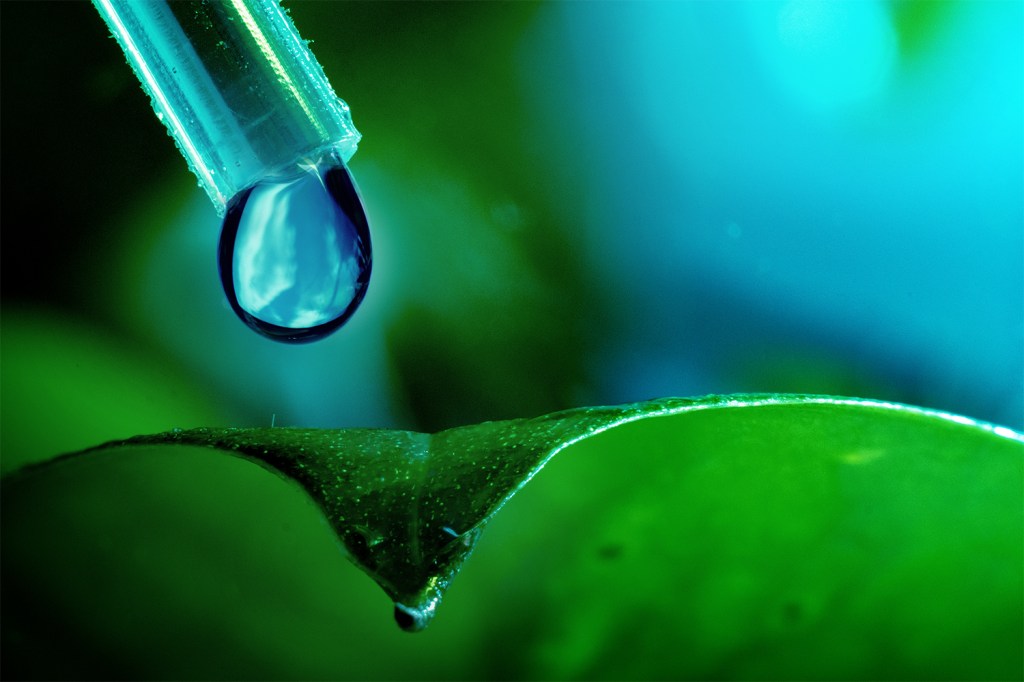
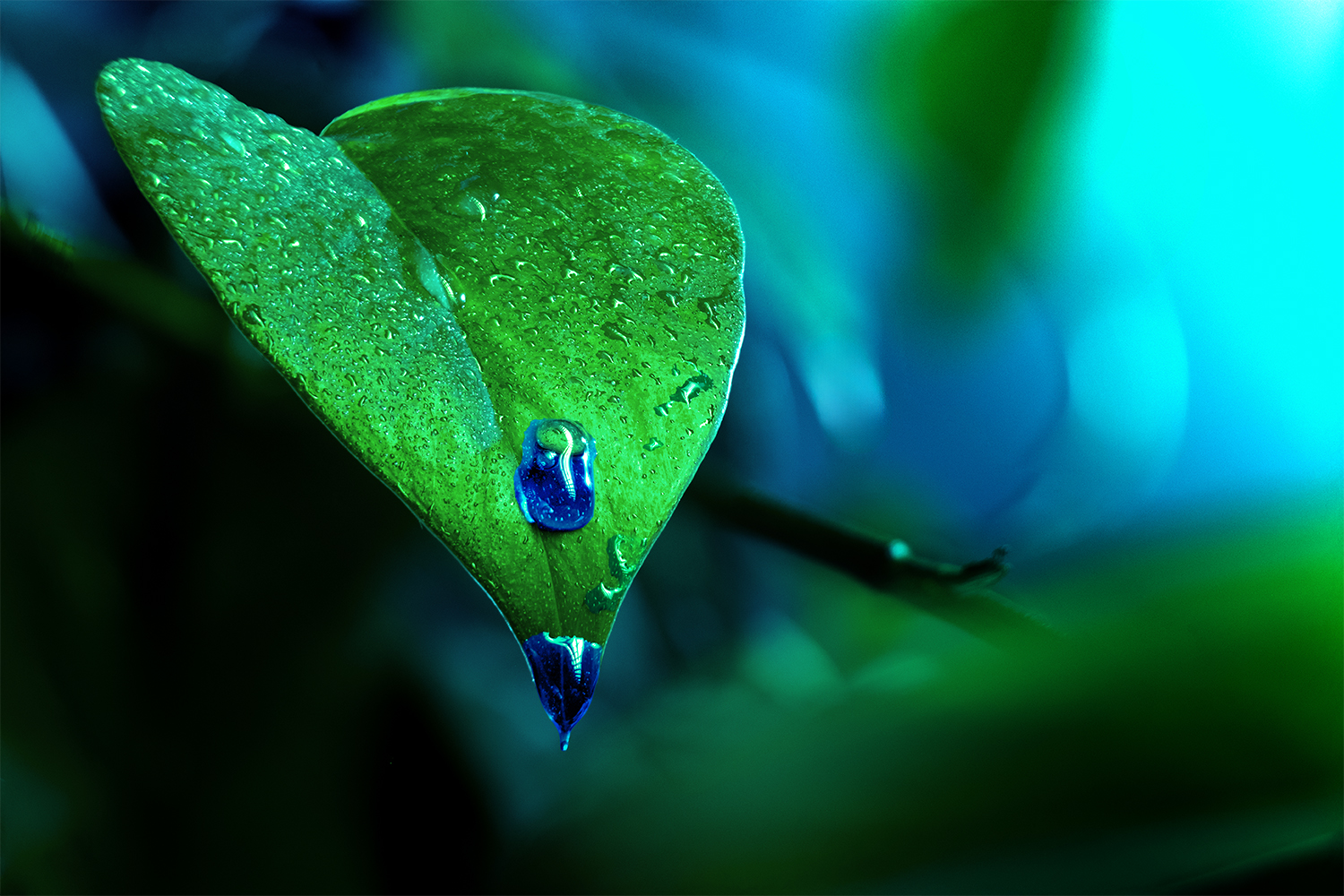
These 2 shots were done on the same day. I had done some practice with macro stacking before, so I more or less knew how to do these. I used three macro rings together. The Fuji has a focus stack setting – just set it up and let it go. This is why you want an autofocus macro lens!
These both incorporated lots of different shots. In macro, 5.6 is a wide aperture so I used those for the soft background, while the in-focus areas are f16. The leaf, the pipette and the drop with the cloud in were all separate shots. I just used an image of clouds on my phone behind the drop. Gosh, I spent a lot of time mucking around with these in Photoshop. I love macro though.


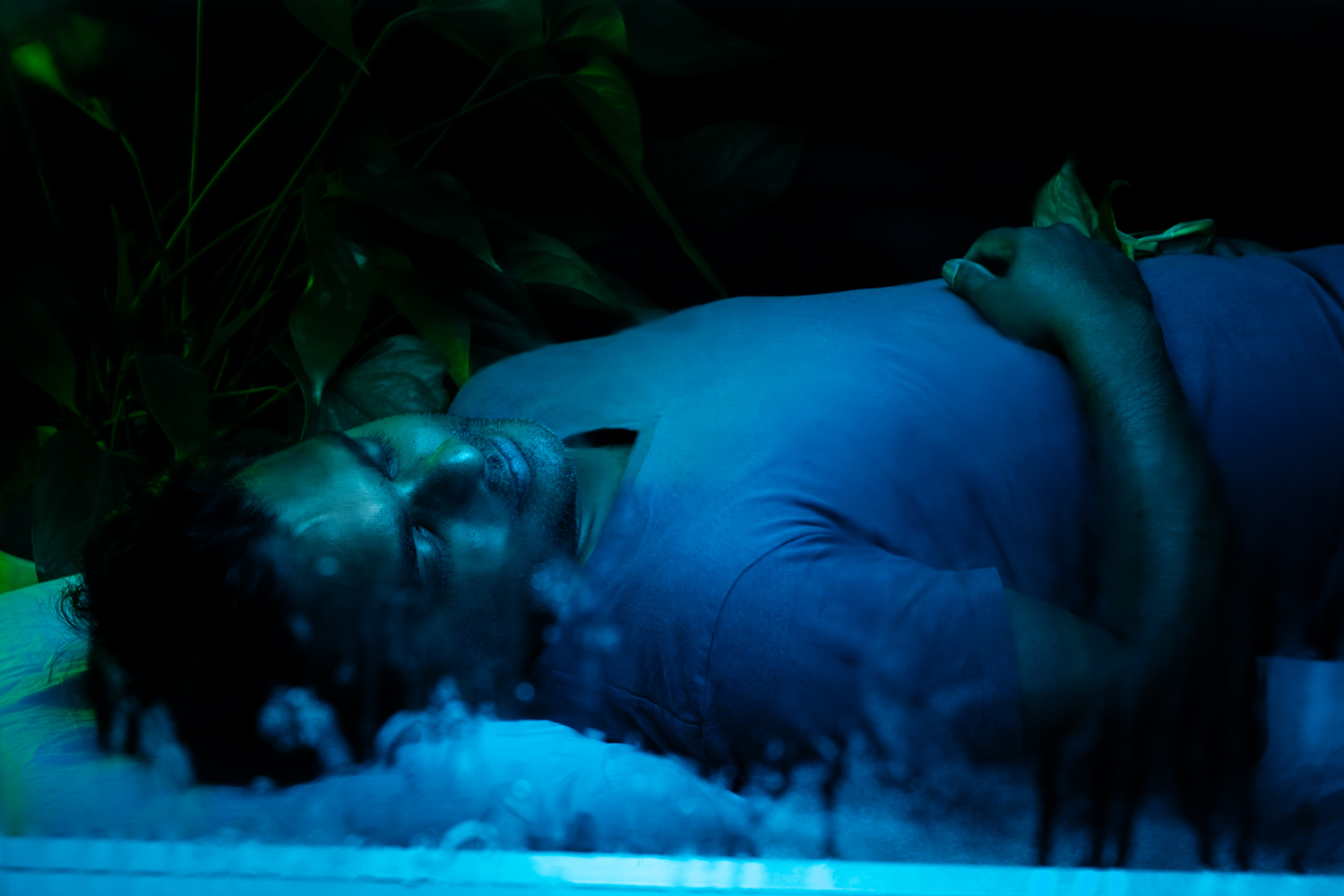
I had some two more studio days, and these were the result. More human presence, and playing with more glass effects – frosting some plexi with glycerin. For the bottle, I used a broncolor snoot/lens thing, sort of like a spotlight, and my friend Chad added some smoke of his own – matches just weren’t doing the trick. I also customised a kind of palm-leaf cutout for the backdrop light, to make a pattern.

Finally, I needed an establishing shot. I found a seldom-used stairway in the basement of my apartment building, which looked suitably industrial, and bought some second-hand thongs to stick in front of it, just like I’d seen in District 5. Petals kept falling off the rose and I realised after that I could have left some on the floor for good effect.
The final lineup:



Nomenclature
The working title for this series was ‘Apartment’, but I came upon a better idea when visiting the botanical gardens in Ballarat, and their collection of Wardian cases. These were a kind of sealed terrarium that allowed the transport of plants by ship, named for their inventor Nathaniel Ward. And that’s how the title ‘Wardian World’ was given.

Dissection
It’s notable for me that I had already done two separate shoots to test the idea before the task had even properly begun. With my personality, averse to failure, I like to be prepared before I get the camera out. Here, I found that shooting is part of planning.
Altogether, I feel that the vision for the folio was more or less achieved. Still, there’s a lot about this world that is still unrevealed. This series uses a lot of darkness to hide what isn’t there. I guess one drawback of conceptual photography is the need to create or source all the little details that will appear, like backgrounds, props and costumes.
As compelling as documentary photography is, there’s something special about the artistic force you get with a good concept.
 Twist and Click